




XXVI World Congress of Philosophy
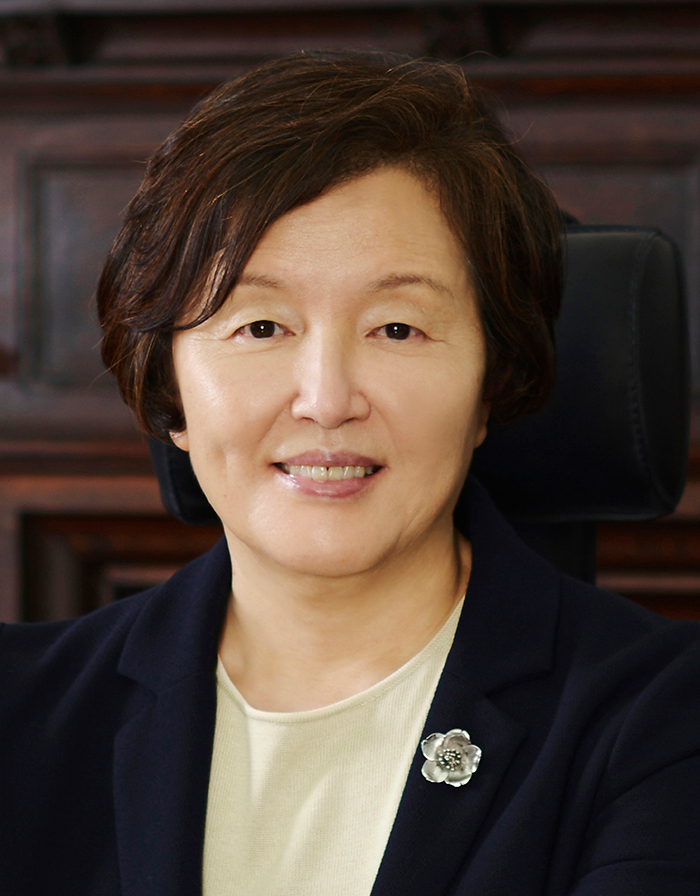
Heisook Kim, President of FISP
Welcome Message from the President of the FISP
Dear Colleagues and Lovers of Philosophy across the World
As we look forward to the XXVI World Congress of Philosophy, to be held in August 2028, I am delighted to extend a warm welcome to you in my capacity as President of FISP. The history of the World Congress of Philosophy dates back to August 1900, when the first International Congress of Philosophy was held in Paris, France. In 1973, the Congress adopted its present name, the World Congress of Philosophy, and has since been held regularly every five years. Since its founding in 1948, FISP has continued to organize the Congress. Now, in collaboration with the Japanese Organizing Committee (JOC), FISP will convene the 26th World Congress of Philosophy at the University of Tokyo from August 16 to 23, 2028. First of all, I would like to express my sincere gratitude to Professor Notomi, President of the JOC, and to our Japanese colleagues for their dedicated efforts and commitment to making this Congress a success.
The main theme of WCP Tokyo 2028 is “Philosophy: A Place for Open Dialogue.” In accordance with the main theme, the Congress has been structured around five key concepts: “Philosophy,” “Place,” “Openness,” “Dialogue,” and “World.” I would like to briefly reflect on the implications of these five key concepts.
The theme of philosophy has become increasingly significant in the face of the radical transformations and growing complexity of human civilization and the contemporary intellectual landscape. The emergence and maturation of digital technology pose a profound challenge to human civilization. The growing politics of conflict and hatred is making the call for a philosophy of dialogue and peace ever more urgent.
“Place” as a philosophical concept encompasses multiple dimensions of human existence. As spatio-temporal beings, humans shape and transform their environment in accordance with their aspirations, needs, and desires. What distinguishes human beings is their capacity to seek values and meanings beyond what is simply given, thereby transforming physical space into a place (basho in the context of Japanese philosophy, 場所) for thought and dialogue. This is where philosophy takes root and begins to flourish.
“Openness” is a virtue that has been especially valued in democratic societies. In a closed and authoritarian society, injustice and corruption are difficult to avoid. Yet when life becomes increasingly harsh and demanding, openness may degenerate into a kind of valuelessness—an indiscriminate openness to anything and everything. Reflecting on ‘openness’ has become an important task for philosophy.
Dialogue as a method of philosophizing has been constantly emphasized, especially in the context of Western philosophy. When truths are neither fixed nor certain, we have to rely on dialectical reasoning. Philosophical dialogue, at its outset, does not exclude anything that has a rational basis. In our world, we cannot avoid conflict and opposition, which makes dialogue all the more urgent. Without dialogue, we are left with nothing but destructive violence and war.
While the Tokyo Congress will organize its sessions around these important concepts, it will also feature sections covering a wide range of topics of interest to philosophers around the world, as well as various roundtables, invited lectures, endowed lectures, and cultural performances. As this Congress will be held in Asia, I hope it will provide a wonderful opportunity for philosophers from the East and the West to come together and celebrate the richness and diversity of philosophical thought. Philosophy encompasses many different branches, and philosophical thinking takes diverse forms across different regions of the world. I hope the Tokyo Congress will enable participants to explore the many dimensions of human thought and deepen their mutual understanding.
Although philosophy often begins with an individual’s personal struggles and questions, philosophical reflection extends beyond the individual to encompass society, the world, nature, and the universe. I look forward to the Tokyo Congress as an opportunity for us to reaffirm what it means to be human as thinking beings. I also hope that participants will have opportunities to experience Japan’s rich and diverse culture during the Congress. I look forward to welcoming you to Tokyo, a city that embodies a long tradition and a wealth of delicate and beautiful cultural heritage.
Heisook Kim
President of FISP
President of the XXVI World Congress of Philosophy
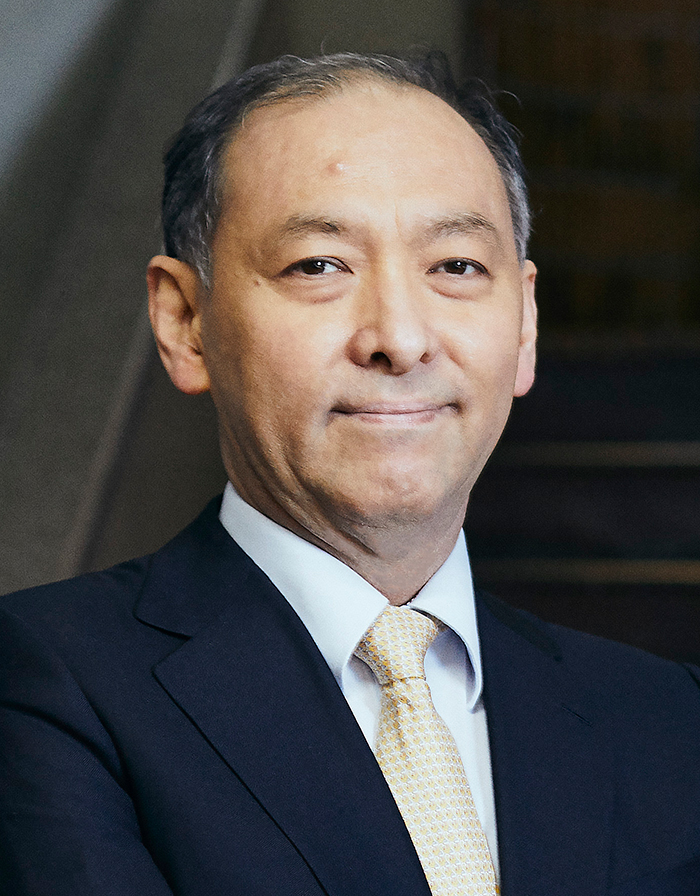
Noburu Notomi, President of the JOC
Welcome Message from the President of the Japanese Organizing Committee
It is our greatest honour and pleasure to host the World Congress of Philosophy in Tokyo in 2028. More than a century has passed since the first International Congress of Philosophy was held in Paris, and Japanese philosophers have participated in these congresses from the early years, engaging in lively philosophical discussions with colleagues from around the world. We are deeply grateful for the hospitality extended to us by the host countries of previous congresses. Now it is our turn to welcome philosophers from around the world to Japan for the first time in the history of the World Congress of Philosophy.
Situated on the eastern edge of Asia, Japan has developed a distinctive philosophical culture while drawing on several major civilisations. Japan’s climate and cultural environment (fūdo 風土), with roots reaching back to the prehistoric Jōmon period (c. 14,000–300 BCE) and the Yayoi period (c. 300 BCE–300 CE), provided the background against which new intellectual and religious traditions developed. From around the sixth century onwards, Japanese culture was profoundly influenced by Confucianism and Buddhism, alongside the growing use of Chinese characters (kanji 漢字), primarily through contacts with China and the Korean Peninsula. Buddhism itself originated in India, and its teachings reached Japan largely through Chinese translations of Buddhist scriptures originally composed in Sanskrit and other Indian languages. Important religious and philosophical thinkers such as Prince Shōtoku 聖徳太子 (sixth–seventh centuries), Saichō 最澄 and Kūkai 空海 (eighth–ninth centuries) played significant roles in promoting and integrating Buddhist thought into Japanese culture.
Alongside the continuing, though intermittent, influences from continental East Asia, distinctive Japanese spiritual traditions developed through Shinto 神道, Shugendō 修験道 (a syncretic tradition combining mountain worship, Buddhism, and indigenous religious practices), and other forms of religious life. During the tenth and eleventh centuries, women writers flourished, producing remarkable literary works, including the novel The Tale of Genji (源氏物語) by Murasaki Shikibu 紫式部, the collection of essays The Pillow Book (枕草子) by Sei Shōnagon 清少納言, as well as diaries and poetry. These works are recognised as masterpieces of world literature and also offer distinctive philosophical insights into human life, emotions, and relationships.
The Kamakura period (late twelfth to fourteenth centuries) witnessed the emergence of new forms of Buddhism and influential religious thinkers, including Hōnen 法然, Shinran 親鸞, Ippen 一遍, Eisai 栄西, Dōgen 道元, and Nichiren 日蓮. Buddhism has remained a central element of Japanese intellectual culture and everyday life. Drawing on Buddhist, Shinto, and other cultural traditions, distinctive Japanese art forms, such as Noh 能, the tea ceremony 茶道, and Kabuki 歌舞伎, developed and flourished from the Muromachi period (fourteenth–sixteenth centuries) to the Edo period (seventeenth–nineteenth centuries).
Western civilisation and philosophy were introduced to Japan from the late sixteenth to the early seventeenth century, and again on a much larger scale from the mid-nineteenth century, as Japan became increasingly engaged with the wider world. In the nineteenth century, the Western concept of ‘philosophy’ was translated into Japanese as tetsugaku 哲学, a term that subsequently spread throughout East Asia. In modern Japan, philosophers such as Nishida Kitarō 西田幾多郎 and Watsuji Tetsurō 和辻哲郎 sought to develop distinctive forms of Japanese philosophy through engagement with European philosophical traditions. In post-war Japan, philosophers such as Izutsu Toshihiko 井筒俊彦 and Sakabe Megumi 坂部恵, among many others, further enriched Japanese philosophical thought.
Through these encounters, Japanese thinkers did not merely adopt foreign ideas but creatively transformed them into distinctive forms of thought and practice. This long history of intellectual exchange encourages us to embrace diversity and heterogeneity, engage in open dialogue, and seek possibilities for coexistence.
Since 2018, Japanese philosophers have been working on a World Philosophy project. We published a nine-volume series, A History of World Philosophy (世界哲学史), edited by Itō Kunitake 伊藤邦武, Yamauchi Shirō 山内志朗, Nakajima Takahiro 中島隆博, and myself (Chikuma Shinsho, 2020). Building on these efforts, we now look forward to hosting the World Congress of Philosophy and engaging in dialogue with philosophers from around the world.
In this increasingly turbulent world, we face a wide range of challenges, including global environmental changes, economic and social divisions, threats to international law and peace, and the ethical and social challenges posed by artificial intelligence. At this critical moment, the significance of holding the World Congress of Philosophy in Japan lies in making philosophy a place for open dialogue. What we need now is to bring together people from diverse backgrounds, cultures, and histories to think and engage in dialogue with one another.
We warmly invite people from all over the world to join us in Tokyo, to think together across cultural and intellectual boundaries, and to explore the possibilities that philosophy can open up for our future.
NOTOMI Noburu納富信留
President of the Japanese Organizing Committee of the XXVI World Congress of Philosophy
Professor, Graduate School of Humanities and Sociology, The University of Tokyo
President of the Philosophical Association of Japan
Jacob Dahl Rendtorff, Secretary-General of FISP

Welcome message from the Secretary-General of FISP
Dear Colleagues, friends and philosophers around the world
It is truly a dream coming true to go to the 26th World Congress of Philosophy in Tokyo, Japan. In turbulent times global philosophical reflection is more important than ever and Japan is a country with a rich and profound philosophical tradition. The World Congress of Philosophy is a world and epoch-making event of creative ideas, wisdom and thoughts about the past, present and future of philosophy in the world. The world class University of Tokyo in the cosmopolitan and friendly city of Tokyo with all its hospitality and sophisticated lifestyle is a unique setting for a remarkable world congress. Modern Japanese philosophy with its history of engaged knowing, philosophical pluralism and openness to spirituality is perfect for philosophical imagination and original thought.
This World Congress will surely address major social, environmental and political questions from the perspective of both regional and cosmopolitan thinking. The philosophical community from everywhere in the world will meet and discuss important problems and questions for the future of humanity. This is extremely urgent in the one World of interdependence and interconnectivity. But philosophy is also situated in different cultural and historical traditions and the 26th World Congress of Philosophy will lead to the mutual encounters and interactions between the major and different philosophical traditions reflecting diverse cultural and religious approaches to philosophy.
Philosophers have important political and ethical responsibilities facing the future of humanity in the multi-polar world. The Theme of the World Congress, “Philosophy: A Place for Open Dialogue” with the important words of “Philosophy”, “Openness”, “Dialogue”, “Place” and “World” has been carefully selected after vivid, devoted and committed discussions at the meetings of the Steering Committee of FISP. Dialogue is an essential topic of philosophy and open discussion with intellectual curiosity and search for truth is in the heart of philosophical reflection in all disciplines and movements of philosophy in ontology, epistemology, history of philosophy and contemporary philosophy. And philosophical dialogue is needed in the world in search of peace and solutions to many dark challenges.
The richness of the Program of the 26th World Congress is fascinating and impressive: Plenary Sessions, Symposia, Endowed Lectures, Special Lectures, Roundtables, Invited Sessions, Society Sessions, Students, and not least Sessions with Contributed Papers. In addition, participants should not forget the importance of informal encounters and engaging dialogues with philosophers from all over the world in an intensive and friendly atmosphere of intellectual curiosity and openness to other positions and perspectives. You will probably meet old friends, but also new philosophical connections and collaboration will emerge. Let us be sure that the spirit of philosophy of examining thoughts, hidden assumptions and arguments in open dialogue will materialize in all corners of the congress.
Following up on the great tradition of the World Congresses of Philosophy since the first congress in Paris, year 1900, and the 25th congress in Rome 2024 with the time “Philosophy across Boundaries”, the 26th World Congress in Tokyo will unite notable philosophers and stars of wisdom to examine the role of philosophy as a place of dialogue to contribute to make progress in philosophy for future human happiness and prosperity for all beings on the planet. With its delicate understanding of the importance of peace and deliberation, Japan and Japanese philosophy is a crucial and cardinal place for advancing philosophical reflections in the encounter between the great philosophical traditions between East and West, South and North in all the different parts of the world. The 26th World Congress will be a great place, and space and assembly place between different philosophies with openness and bridges between multiple world views and different concepts of philosophy.
As Secretary-general of FISP, I am deeply thankful to the Japanese Philosophical Societies, to the Japanese Organization Committee and the University of Tokyo for their excellent work with the preparation of this great event of the 26th World Congress of Philosophy. However, without participants no congress, so I wish all participants philosophical societies and philosophers from all over the world who will come to Tokyo an enriching and memorable world congress. I am sure that this will be an unforgettable milestone in your journey of philosophical thought and intellectual explorations.
With all my best wishes
Jacob Dah Rendtorff
Secretary-General
International Federation of Philosophical Societies (FISP)
